
Rating: 3.5/5
Verdict: Love can come at a steep cost, but freedom never should. If this is a sentiment you wish to experience, Possible Love – the recommended watch – is now streaming.
Full review:
Lee Chang-dong’s latest film looks at class divisions, broken relationships and the freedom we all crave. It asks whether everyone truly gets an equal opportunity to find that level of independence.
Possible Love wastes no time diving into the lives of a couple who are completely shattered and barely keeping afloat. They try hard to maintain appearances—with the wife doing almost all the heavy lifting—but the emotional distance between them is obvious right from the start. That initial tension only scratches the surface of where the story ultimately goes. This couple in mention is Jeon Do-yeon’s Mi-ok and Kyung-gu’s Ho-seok.
Although the film moves at an intentionally slow pace, its central point is always clear: there are deep issues waiting to be dealt with. Lee Chang-dong, returning to feature filmmaking after eight years, takes his time building characters and their dynamics. He lets small, seemingly ordinary moments reveal much larger truths.
Jeon Do-yeon is a wonderful fit for Mi-ok, a woman who understands freedom in its truest sense. Yet, she continues to hold her family together because she still sees the man her husband could be. She also plays the ideal woman society expects her to be—adjusting constantly, taking on every responsibility, and staying firmly within her social class. Sul Kyung-gu’s portrayal of Ho-seok is just as powerful. He plays a man thoroughly worn down by his circumstances, keeping up a tough front until his path toward healing brings some beautifully performed, vulnerable breakdowns.
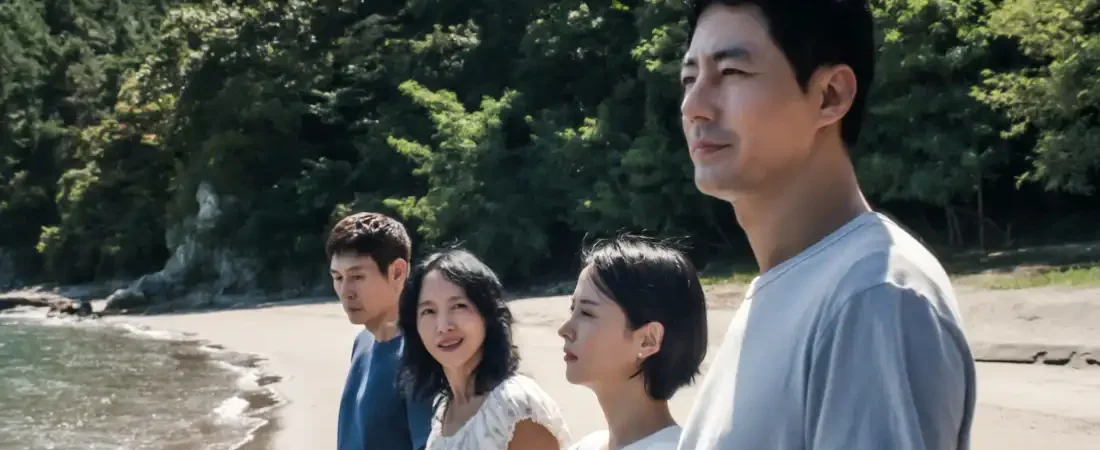
Their world soon collides with another couple living on the opposite side of privilege: Ye-ji and her husband, Sang-woo (actor Zo In-sung). Cho Yeo-jeong plays the role of Ye-ji. She enters the picture as a documentary filmmaker trying to build a career and establish an identity beyond just being a rich man’s wife. Seeing potential in Ho-seok’s story, she decides to pursue it. Her methods are unruly and she handles his delicate situation quite poorly by repeatedly crossing the line into his personal space. Yet, her intentions are not evil. When Ho-seok breaks down and struggles to breathe, she genuinely steps in to calm him down, showing that she can be human when it counts.
Bringing these two couples together puts the stark class divide on full display across almost every scene. You see it everywhere, from Ye-ji casually owning a designer bag worth over a million to the completely different ways the two couples drink rosé wine.
There is an unmistakable spark between Mi-ok and Sang-woo. But for Mi-ok, it comes from deep emotional loneliness and curiosity about a life she never had – and she appears to understand that. For years, she has had nobody to share the lovely, gentle moments of life with, making her drawn to the easy comfort Sang-woo represents.
Kim Ji-yong’s camera work moves between close intimacy and distant frames, reflecting the shifting space between the characters. The seaside vacation house is where the biggest shifts happen; it is here that their masks drop, and their real feelings come out. Jung Jae-il’s restrained background score works quietly in the background. The music during the drive to the vacation home marks the exact moment Ye-ji and Sang-woo’s too-dreamy-to-be-true love starts falling apart, adding weight without overpowering the scenes.
In the middle of these complicated adult dynamics, the little boy Cheol (actor Jung Seol) stands out. He is remarkably sharp, understanding what is happening between the adults far better than they understand themselves, while the grown men repeatedly refuse to mature. There is also a pet dog named Blue, but it is the child who leaves the real impression.
Ho-seok’s backstory turns out to be a heartbreaking picture of human cowardice and betrayal. The people he trusted most turned their backs on him right when he needed help. One of the film’s most moving transitions shifts from the hope of what could have been to the harsh reality he actually lived through. The emotions are brought to life with raw honesty by Sul’s acting.
Possible Love leaves us with four people who must return to their separate lives. Mi-ok and Ho-seok survive this rough patch, but it feels like a temporary fix. Can things actually go back to normal? And just like that, Possible Love ends – with the class divide still prominent and one question lingering on. Can everybody afford freedom? What is the price to pay to get independence?
Also Read: Possible Love: Everything to Know About Lee Chang-dong’s Award-Winning Film Before Its Netflix Debut