
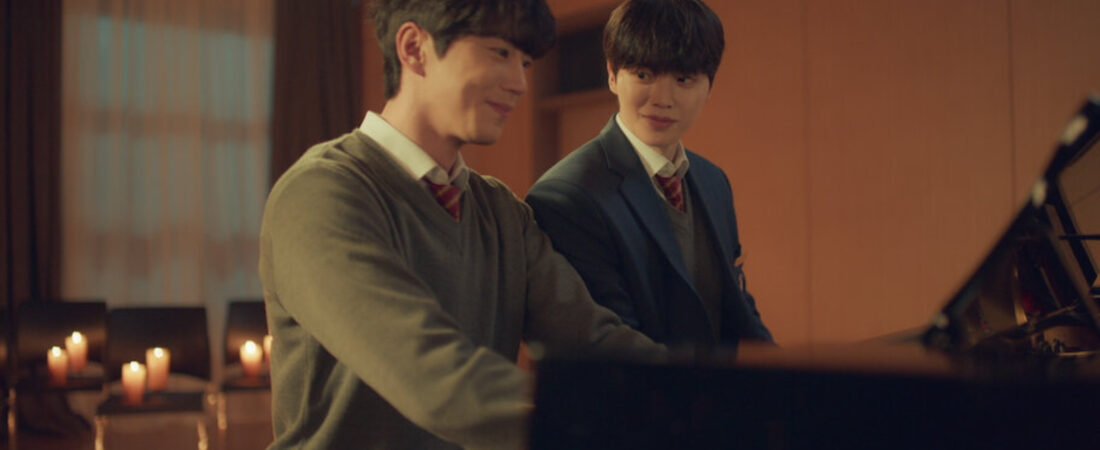
Imagine your childhood best friend, who has silently supported your dreams even when you gave up on them, leaving you with just one note: to continue your journey because you deserve the spotlight. You search for that friend for years, only to find them miles away, in a church. They may not even speak your language when you meet, but there’s love nonetheless. Four Hands, Two Sonatas takes the story to Prague, Czech Republic, for precisely this moment. It is the destination that becomes a major part of the narrative and its climactic scene. After all the turmoil, pain, betrayal and deceit, the two friends find each other through their love for music. One of them gains global recognition beyond South Korea but keeps it hidden from the world, while the other travels to Prague to explore a new life. They both seek belonging and find it in each other, all in Prague, making the destination a lovely change from everyday life.
Finding the story in Prague
Prague’s appeal goes beyond its role as a filming destination. Its historic architecture, riverside views, concert halls and quieter gardens make it a natural setting for a story about memory, music and rediscovery.
The Czech Film Commission lists several locations used in the production, including the Rudolfinum, Vinohrady Theatre, Mánes Bridge, Chotkovy Sady, Pankrác Tram Depot, Podolí, Václav Havel Airport and Hotel International.
But the emotional centre of the finale lies beyond the capital. The reunion scene, in which Jeong-yo conducts a children’s choir and Pi-o finds him again, was filmed at the Basilica of the Nativity of the Virgin Mary in Doksany. The church forms part of the historic Doksany Convent complex, making it a particularly meaningful stop for viewers who want to experience the setting behind the drama’s closing moments.
A three-day Four Hands, Two Sonatas itinerary
Day 1: Prague’s musical landmarks
– Begin at the Rudolfinum, home to the Czech Philharmonic. Check the performance calendar if you would like to experience a concert.
– Walk across Mánes Bridge for views of the Vltava River and Prague Castle.
– Visit Chotkovy Sady, a peaceful park overlooking the city.
– Spend the evening exploring Prague’s historic centre.
Day 2: The city beyond the screen
– Explore Old Town Square and its historic streets.
– Walk across Charles Bridge and along the Vltava.
– Visit the Vinohrady Theatre and discover the surrounding neighbourhood.
– Keep the evening free for a concert, café or leisurely dinner.
Day 3: The reunion in Doksany
– Travel approximately 50 km northwest of Prague to Doksany.
– Visit the Basilica of the Nativity of the Virgin Mary and its 12th-century Romanesque crypt.
– Explore the historic convent complex through an organised visit.
– Return to Prague.
Essential travel guide
| Detail | Information |
| Destination | Prague and Doksany, Czech Republic |
| Main airport | Václav Havel Airport Prague |
| Currency | Czech koruna (CZK) |
| Language | Czech |
| Suggested stay | Three days |
| Best time to visit | Spring and autumn |
| Getting around | Metro, trams, buses and walking |
Getting from the airport
Prague has several public transport connections from Václav Havel Airport:
– Trolleybus 59: Connects the airport with Nádraží Veleslavín, where passengers can transfer to Metro Line A.
– Bus 100: Runs to Zličín, connecting with Metro Line B.
– Bus 191: Connects the airport with Na Knížecí and Anděl, also on Metro Line B.
– Night buses 907 and 910: Provide overnight connections into the city.
– Airport Express: Offers a direct connection to Prague Main Railway Station. It requires a separate ticket rather than a standard city transport pass.
Public transport fares
Standard tickets cover travel across Prague’s integrated public transport network. Depending on the ticket type and purchase method, short journeys cost approximately CZK 30–39, 90-minute tickets CZK 40–50, 24-hour passes CZK 120–150 and 72-hour passes around CZK 330–350.
Check the current PID or Prague Public Transit fare information before travelling, as prices and ticket conditions can change.
Planning your Doksany visit
Doksany is approximately 35–45 minutes from Prague by car, depending on traffic. Public transport can take around 60–75 minutes, depending on the route and connections.
The convent’s guided visits are organised through the local parish and cover the Baroque basilica and Romanesque crypt.
– May–September: Regular public tours generally take place on weekends, with additional weekday visits during July and August.
– October–April: Visits are not regularly scheduled. Contact the parish at least 14 days in advance to arrange access.
– Admission: Entry is by voluntary donation.
Because tour schedules and access arrangements can change, contact the parish before making the journey. Allow additional time if travelling by public transport.
Before you travel
– Check concert schedules and visitor access at the Rudolfinum.
– Confirm opening arrangements for Doksany before setting out.
– Check regional bus and train connections, particularly for the return journey.
– Carry some Czech koruna for smaller purchases and donations.
– Allow time to explore Prague on foot rather than treating every stop as a quick photograph.
Useful resources
– Czech Film Commission – production information and filming locations.
– Prague Public Transit / PID – public transport routes, tickets and fares.
– Václav Havel Airport Prague – airport transport connections.
– Doksany Parish – basilica tours, opening arrangements and visitor information.